Strategy: Flip Your Script
by Ania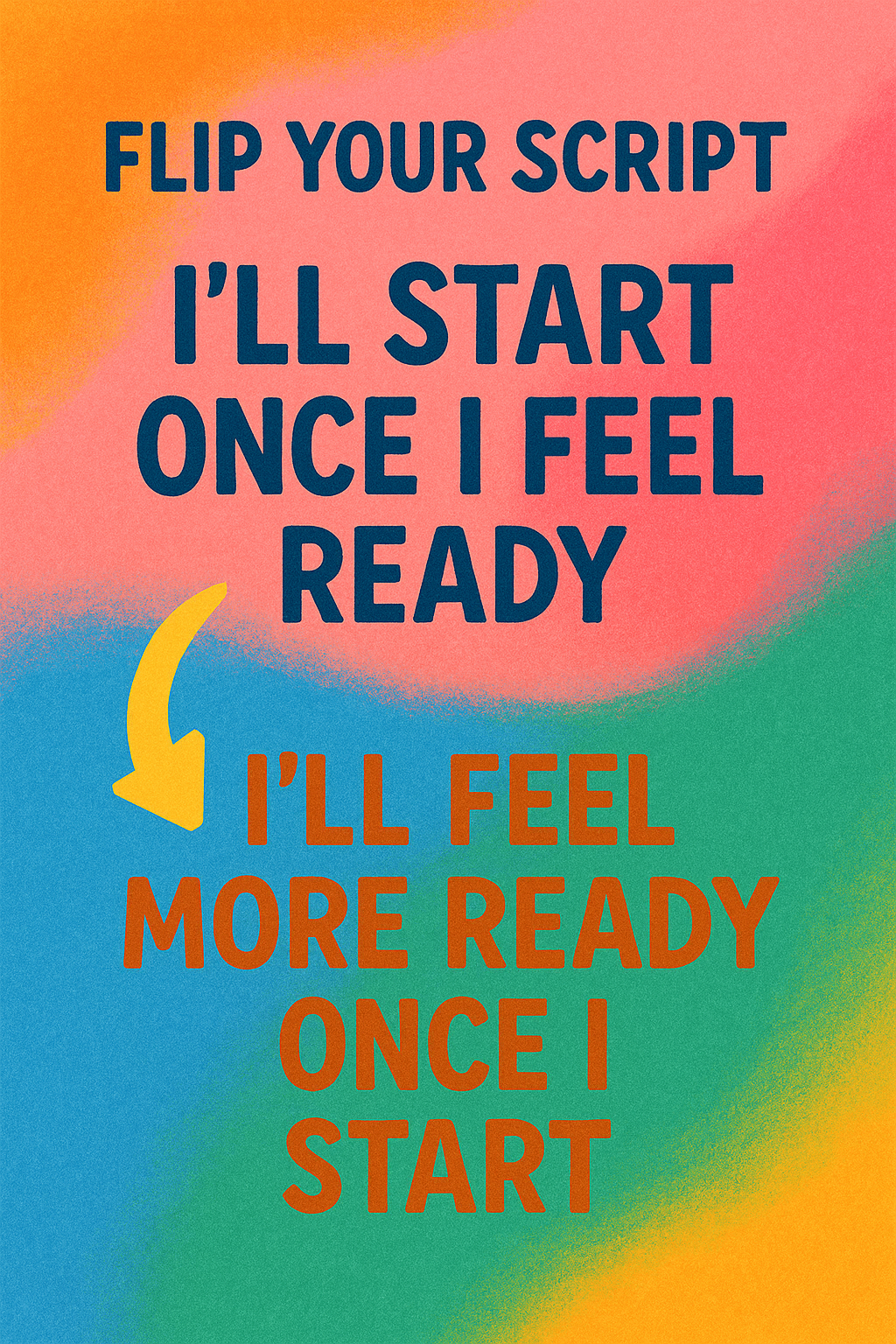
Flip Your Script: Turning "I'll Start Once I Feel Ready" into "I'll Feel More Ready Once I Start"
How a simple mindset shift can break the waiting game and unlock your productivity
You know the feeling. There's a task sitting on your to-do list—maybe it's been there for days, weeks, or even months. Every time you think about it, the same thought surfaces: "I'll start once I feel ready."
Once I have more energy. Once I know exactly what to do. Once I feel more confident. Once the timing feels right.
But here's the thing: that moment of "feeling ready" rarely arrives on its own. Instead, we find ourselves trapped in what psychologists call the "readiness trap"—endlessly waiting for an internal green light that never comes.
The Readiness Trap: Why Waiting Doesn't Work
The belief that we need to feel ready before we start is one of the most common productivity myths. It feels logical, even responsible. After all, wouldn't it be better to begin when we're fully prepared and motivated?
Research in behavioral psychology tells a different story. Studies show that action creates motivation, not the other way around. The famous psychologist William James observed this over a century ago, noting that we don't run because we're afraid—we're afraid because we run. The same principle applies to readiness: we don't start because we feel ready; we feel ready because we start.
Dr. Robert Maurer, author of "One Small Step Can Change Your Life," explains that our brains are wired to resist change, even positive change. When we wait to "feel ready," we're essentially asking our threat-detection system to give us permission to do something new or challenging. Spoiler alert: it rarely will.
The Neuroscience of Starting
When we avoid a task while waiting to feel ready, our brains interpret this as evidence that the task is dangerous or threatening. Each day we don't start reinforces the neural pathways associated with avoidance. Meanwhile, the task looms larger in our minds, accumulating what researchers call "psychological weight."
But something remarkable happens when we take even the smallest action toward our goal. The brain's reward system activates, releasing dopamine and creating what neuroscientists call "positive prediction error"—essentially, our brain realizes that starting wasn't as bad as anticipated. This neurochemical shift makes the next action easier, and the next one after that.
The Script Flip: From Waiting to Creating
Instead of waiting for readiness, what if we flipped the script entirely? What if readiness isn't a prerequisite for starting, but rather a byproduct of it?
Consider these common "waiting" thoughts and their flipped alternatives:
Waiting Script: "Once I feel more confident, I'll apply for that job." Flipped Script: "Once I start applying, I'll build confidence through action."
Waiting Script: "Once I have all the information, I'll make a decision." Flipped Script: "Once I start gathering information actively, I'll gain the clarity I need."
Waiting Script: "Once I feel energized, I'll begin exercising." Flipped Script: "Once I start moving, I'll generate the energy I'm looking for."
The flip transforms readiness from something external we must wait for into something internal we can create.
Real-World Script Flipping in Action
Sarah's Story: The Presentation That Almost Wasn't
Sarah, a marketing manager, had been avoiding preparing for a crucial client presentation for three weeks. Her script: "I'll start once I feel clear about what they really want."
The flip helped her recognize that clarity would come through the process of preparation, not before it. She committed to just opening the presentation file and adding a single bullet point. That small action revealed specific questions about the client's needs, which led to a productive conversation with her colleague, which ultimately created the clarity she'd been waiting for.
Mark's Script Flip: From Overwhelmed to Organized
Mark felt overwhelmed by a home renovation project. His waiting script: "I'll start once I feel less overwhelmed and have a clear plan."
The flipped version: "Once I start with one small area, I'll feel less overwhelmed and see what needs to happen next." He began by simply clearing one corner of one room. The physical action of organizing that small space immediately reduced his sense of chaos and revealed the logical next steps.
How to Flip Your Own Script
1. Identify Your Waiting Story
First, notice when you're in waiting mode. Common phrases include:
- "Once I feel..."
- "When I have..."
- "After I figure out..."
- "If I could just..."
2. Name What You're Really Waiting For
Get specific about the feeling or condition you think you need:
- Confidence
- Clarity
- Energy
- The right mood
- Perfect knowledge
- Ideal circumstances
3. Flip the Sequence
Rewrite your thought by putting action first and the desired feeling second:
- "Once I start taking small steps, I'll build confidence"
- "Once I begin exploring, I'll gain clarity"
- "Once I start moving, I'll generate energy"
4. Test with Tiny Actions
The key to making script flips work is starting incredibly small. Your action should be so minor that it requires almost no readiness at all:
- Open the document
- Write one sentence
- Make one phone call
- Organize one drawer
- Research for five minutes
The Compound Effect of Small Starts
What makes script flipping so powerful is its compound nature. Each small action you take while "not ready" builds evidence that readiness isn't required. Over time, this fundamentally changes your relationship with difficult tasks.
Instead of being someone who waits for the right moment, you become someone who creates the right moment. Instead of seeking permission from your feelings, you learn to generate the feelings you need through action.
When Script Flipping Gets Challenging
Sometimes, flipping the script reveals deeper concerns. If you find yourself strongly resistant to starting even small actions, it might be worth exploring:
- Perfectionism: Are you avoiding starting because you're afraid of doing it imperfectly?
- Fear of commitment: Are you worried that starting means you'll have to finish?
- Imposter syndrome: Do you feel unqualified to even attempt the task?
- Past failures: Are you carrying baggage from previous disappointments?
These deeper emotional blocks often require additional strategies like self-compassion, reframing, or seeking support. The goal isn't to override your emotions but to work with them more skillfully.
Building Your Script-Flipping Practice
Week 1: Recognition
Simply notice when you're in waiting mode. Keep a small notebook or phone note where you jot down your "once I feel..." thoughts.
Week 2: Flipping
For each waiting thought you notice, practice writing the flipped version. Don't worry about believing it yet—just practice the language.
Week 3: Tiny Testing
Choose one flipped script and test it with the smallest possible action. The goal is to prove to yourself that you can start without feeling ready.
Week 4: Integration
Begin applying script flipping to bigger challenges, always starting with actions so small they require minimal readiness.
The Readiness Paradox Resolved
Here's the beautiful paradox: the moment you stop waiting to feel ready is often the moment you start becoming ready. Not because the external circumstances changed, but because you changed your relationship with uncertainty and discomfort.
Readiness isn't a feeling you wait for—it's a skill you develop. And like all skills, it's developed through practice, not through thinking about practice.
The next time you catch yourself thinking "I'll start once I feel ready," try flipping it: "I'll feel more ready once I start." Then take the smallest possible step forward. Your future self—the one who's already started—will thank you.
Ready to start flipping your own scripts? Notice what task you've been avoiding while waiting to "feel ready." Write down your waiting thought, flip it, and identify one tiny action you could take right now. Sometimes the most powerful transformations begin with the simplest steps.